

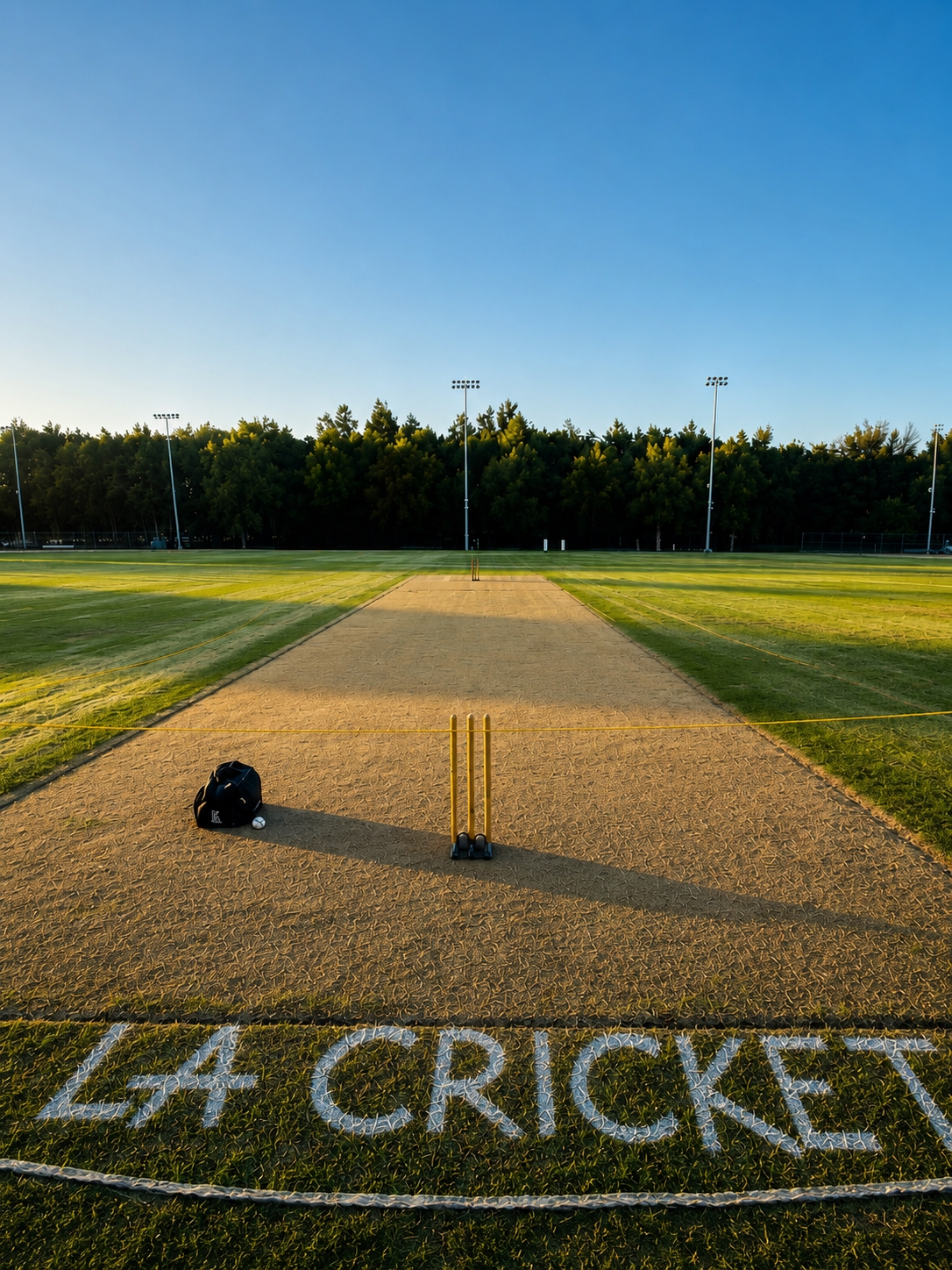
Los Angeles Cricket Ground
Hjelte Sports Center has a long history of serving the San Fernando Valley as a home for community recreation, organized sports, and local leagues. Los Angeles Cricket (LAC) is honored to be part of that tradition and to help introduce a new home for cricket within the complex.
Los Angeles Cricket Ground, located at Hjelte Sports Center, was developed with the support and guidance of the City of Los Angeles Department of Recreation and Parks. The multi-use complex also supports baseball, softball, soccer, ultimate frisbee, and other community programs.
The dedicated 20 ft × 80 ft natural-turf cricket square was fully funded and built by Los Angeles Cricket. LAC operates and maintains the cricket turf at Hjelte and organizes matches, leagues, training, youth development, tournaments, and community events.
For programs, matches, and upcoming events, visit the Los Angeles Cricket website.
New to cricket?
You’re in good company.
Here for softball, a walk, or a day at Hjelte? Curious about the bats, the stumps, and all that cheering? Welcome. You don’t need to know the rules to enjoy watching. Meet T20—the fast-paced cricket format coming to the Los Angeles 2028 Olympic Games.
Get to know the ground.
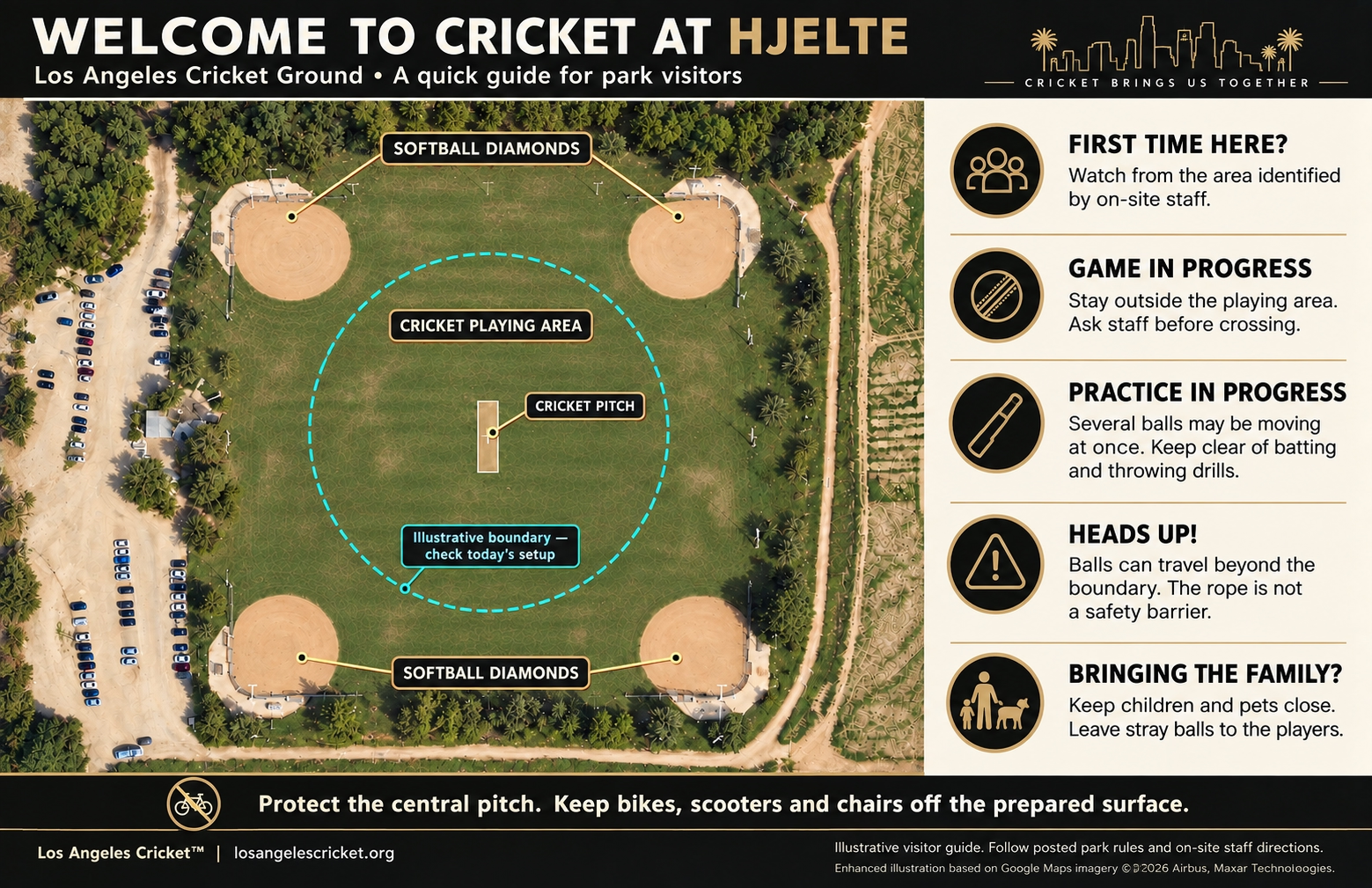
See where the central cricket area sits within Hjelte’s four softball fields. Tap the plan to enlarge it.
 Tap to enlarge ↗
Illustrative ground plan. The marked circle is a cricket boundary, not a safety barrier or an approved spectator zone. Follow the signs and staff directions on the day.
Matches you can come and watch.
Scheduled fixtures at Los Angeles Cricket Ground. Entry and parking arrangements are set by the venue on the day — check the posted signs when you arrive.
Dates and start times can change at short notice for weather, ground conditions, or competition scheduling. Confirm before travelling.
Cricket ground specifications.
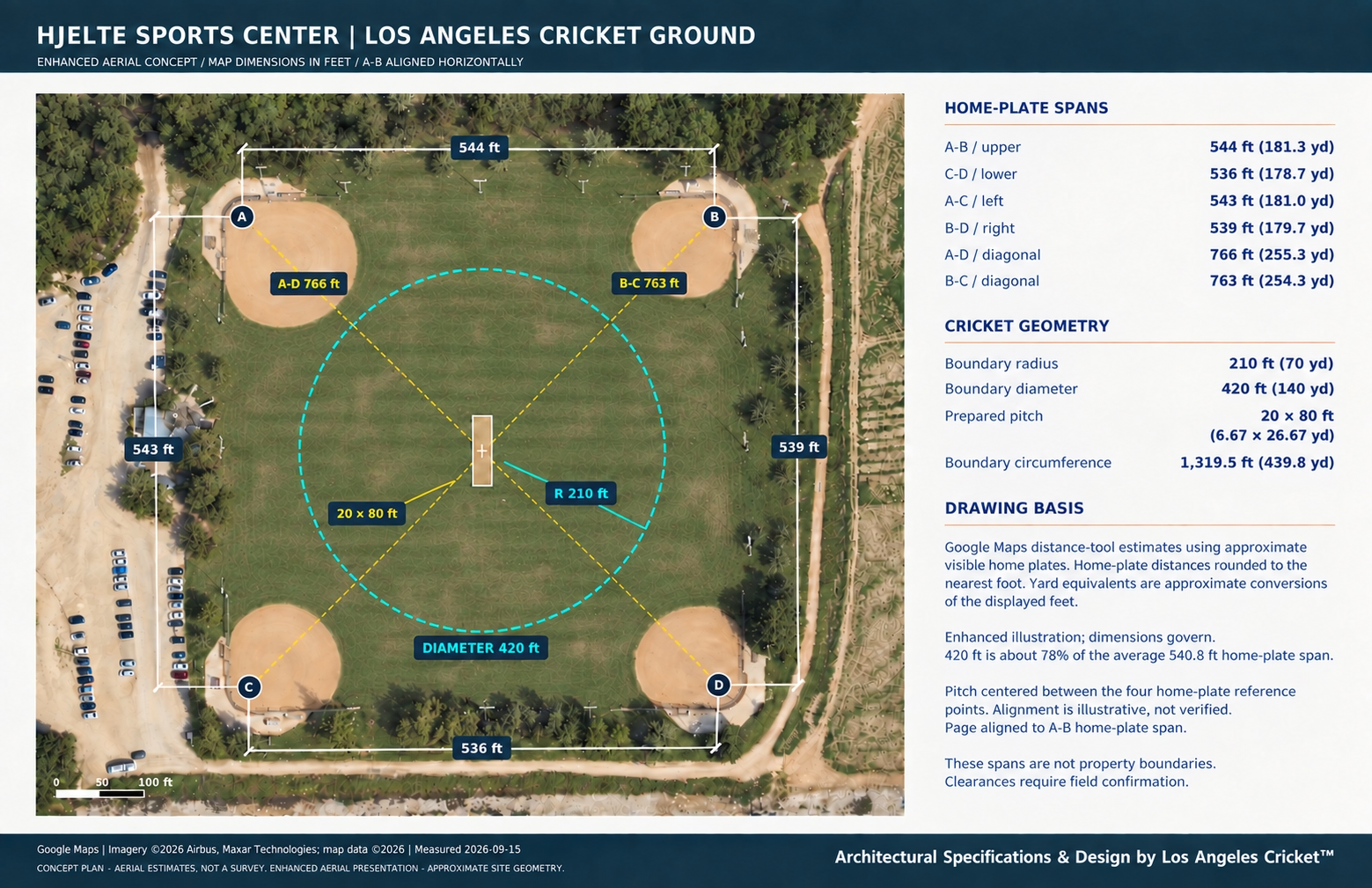
Explore the ground layout and cricket dimensions. Tap the drawing to enlarge it.
 Tap to enlarge ↗
Concept illustration, not a surveyed site plan. The cricket boundary marks the scoring area; it is not a safety barrier. Follow posted signs and on-site staff directions.
Start with a cricket overview.
Watch this introduction, then follow the illustrated guides below.
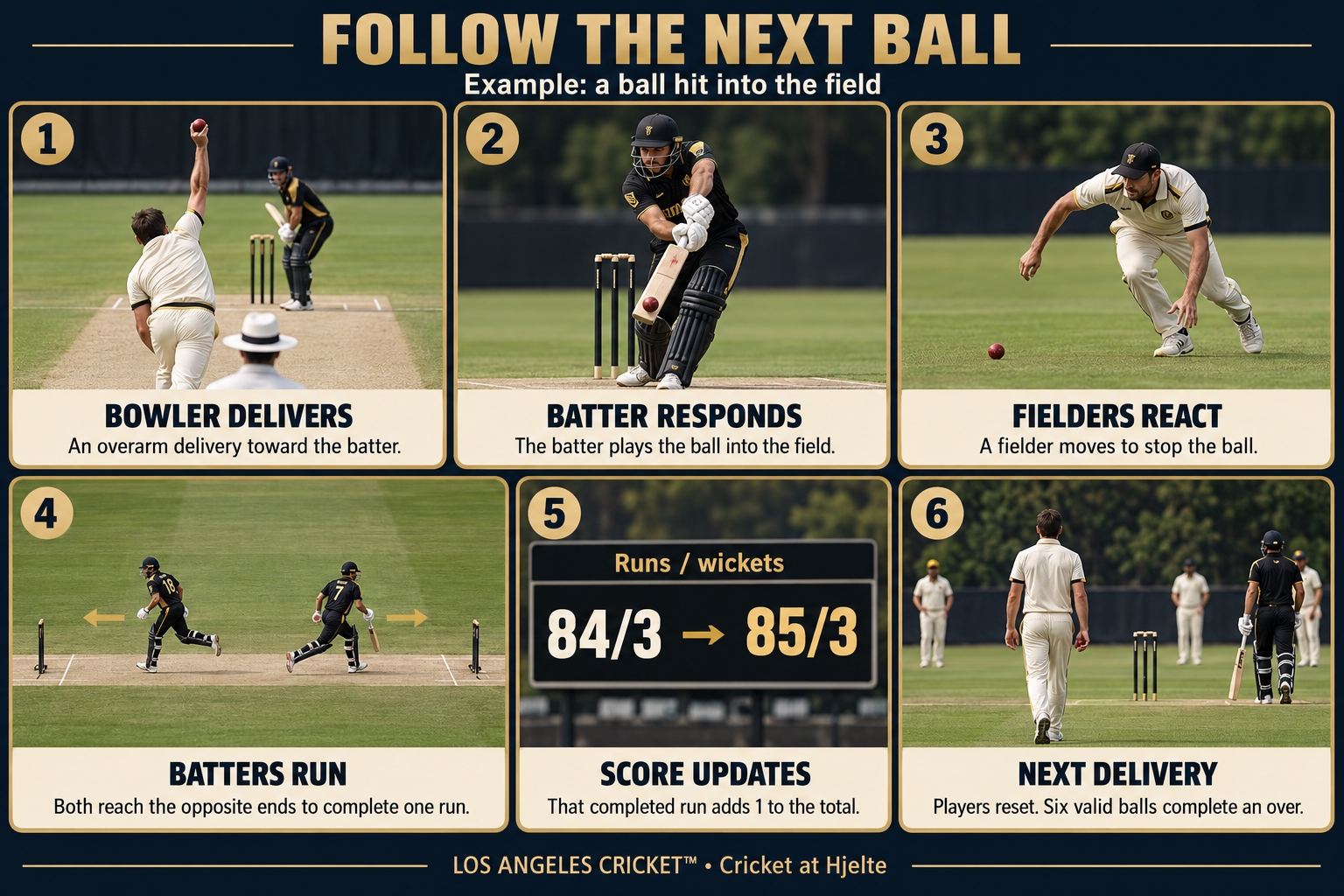
Follow the next ball.
Watch the delivery, follow the hit, then check the score.
 Tap to enlarge ↗
The essentials in words
The bowler delivers toward the batter. After a hit, fielders try to stop or catch the ball while the two batters can exchange ends to score runs. A miss alone is not an out. Six valid deliveries complete an over; wides and no-balls do not count toward those six.
T20, by the numbers.
Coming from baseball or softball? Here’s your quick translation. These numbers describe a standard, full-length T20 game; youth sessions, practice, and shortened matches can differ.
Valid deliveries per team
Think “pitches,” but cricket calls them balls or deliveries. In a full T20 innings, a team can face up to 120 valid balls. Wides and no-balls add runs and do not use up one of those 120.
Overs per team
Each side bats for up to 20 overs. Its innings ends sooner if it is all out or, when chasing, reaches the winning target. Weather can reduce the allocation.
Valid balls in an over
Six valid deliveries complete one over. Then another bowler takes over from the opposite end. Extra deliveries may be needed after wides or no-balls.
Players on each team
The fielding side has 11 players spread around the ground, including the bowler and wicketkeeper. Smaller beginner groups may use adapted rules.
Batters at a time
One faces the delivery; the other waits at the opposite end. They can exchange ends to score runs. Both must make their ground safely.
Dismissal per batter
Once you are out, your turn in that innings is over. No three-strike allowance and no later turn in the batting order. But a swing and a miss alone is not an out.
Wickets for “all out”
In a standard 11-player team, losing 10 wickets normally ends the innings. The last batter has no partner left. A new batter usually replaces each dismissed player.
Overs maximum per bowler
In a full 20-over innings, one bowler can bowl at most four overs—24 valid deliveries. That means a team needs at least five bowlers to deliver all 20 overs.
Yes, those catches are bare-handed.
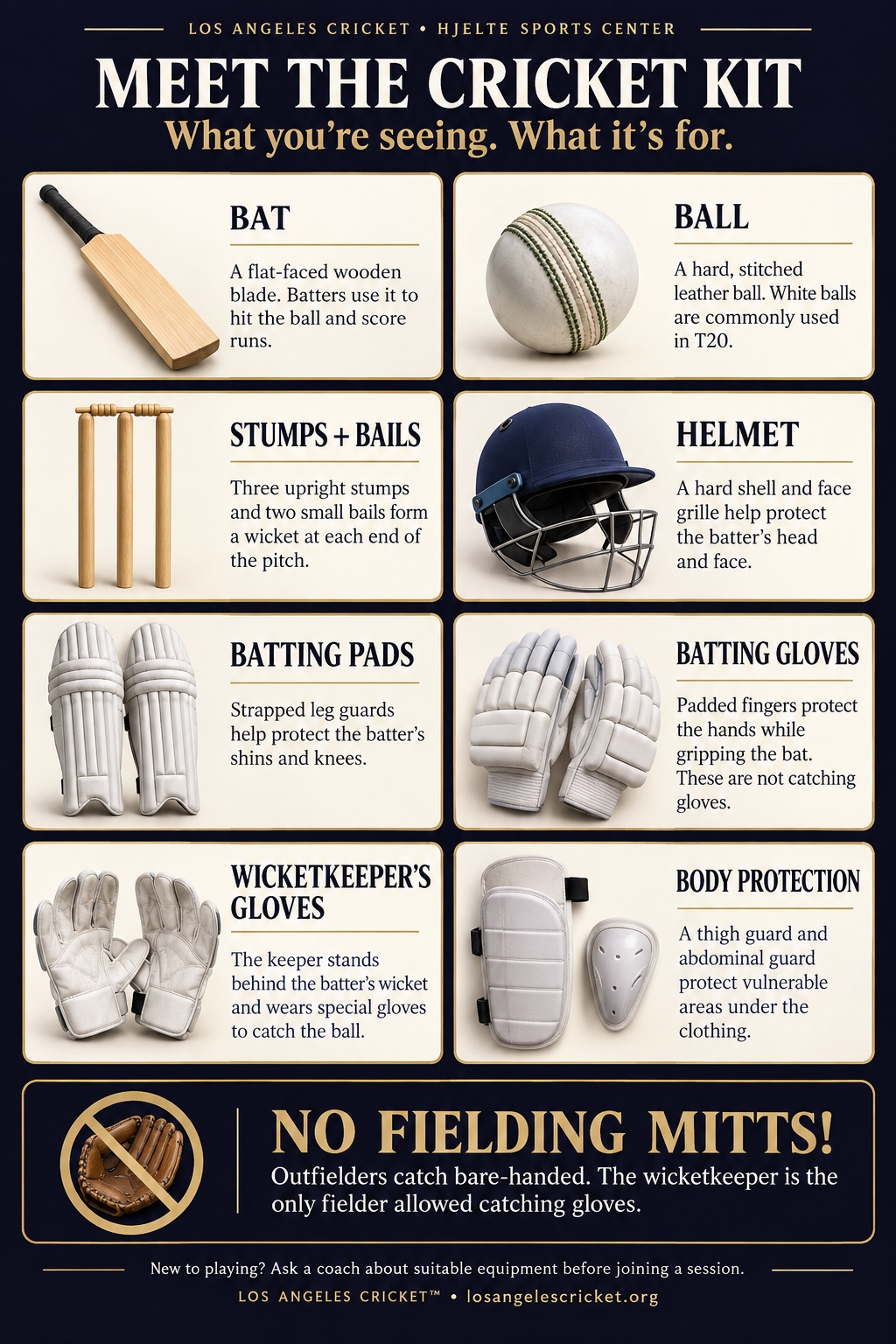
Ordinary fielders catch and stop a hard cricket ball without a baseball-style glove. The wicketkeeper—the player behind the batter’s stumps—is the only fielder allowed catching gloves. Batters wear protective batting gloves for a different job.
Admire the skill; don’t copy it from the sidelines. Leave fast, high, or stray balls to the players. The hard ball is one reason visitors should stay alert beyond the boundary.
No three strikes. No automatic walk.
A batter can leave a delivery or swing and miss without being out. A dot ball means no run was scored. A wide awards an extra run and must be bowled again; it does not send the batter to a base.
One over. Six chances.
Needing 10 runs from 6 balls? A four and a six can finish the chase in two deliveries. A wicket or a dot ball can suddenly make it much harder.
A missed ball can still produce a dismissal—for example, if it hits the wicket. The umpire decides whether an out is valid.
Runs, wickets, and the chase.
Each team bats once in T20, for up to 20 overs. The second team chases the first team’s total.
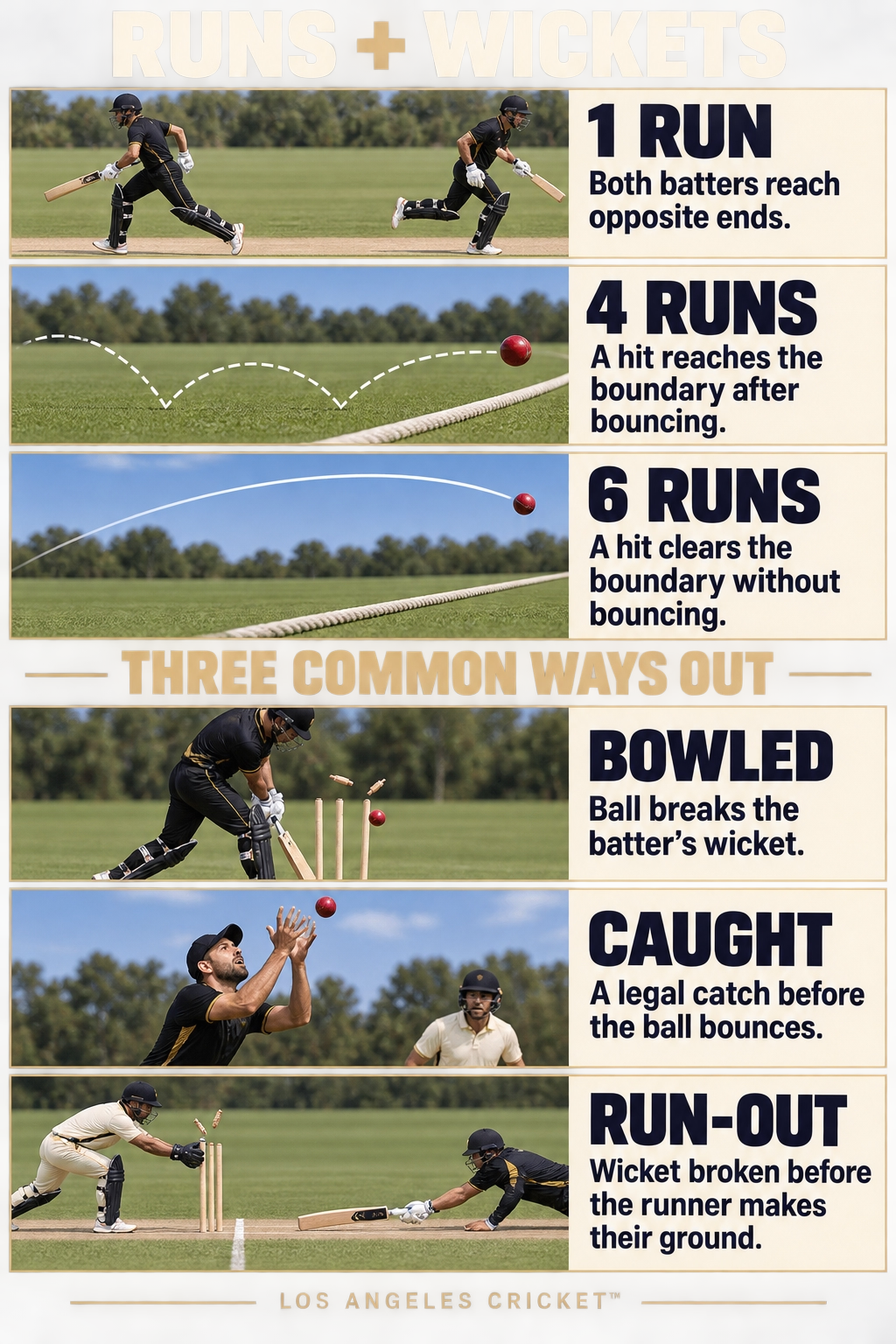 Tap to enlarge ↗
Scoring and dismissals in words
Both batters reaching opposite ends completes one run. A hit reaching the boundary after touching the ground normally scores four; clearing it without bouncing normally scores six. Those boundary runs replace the ordinary running score. Common dismissals include bowled, a legal catch before the ball bounces, and run-out when the wicket is broken before the runner makes their ground. Other scoring and dismissal rules also apply.
84 runs · 3 wickets lost
10.2 = 10 full overs + 2 valid balls.
“Need 18 from 12”? The chasing team needs 18 more runs from 12 valid balls to win.
The world is coming to watch cricket.
You can start here.
Cricket is returning to the Olympic Games at LA28, with men’s and women’s competitions using the T20 format. The same essentials you learn here—runs, wickets, fours, sixes, and the final-over chase—will help you follow the Olympic action.
Hjelte is a place to discover the game locally, meet players, and ask questions. Follow the official LA28 site for Olympic venues, schedules, and event details.
Explore cricket at LA28Three moments worth watching
A fast start.
Batters look for early scoring opportunities while bowlers try to take wickets. Watch how fielders change positions between balls.
The game can turn in seconds.
A six adds six runs in one shot. A catch can end a batter’s innings immediately. Both can change the mood of the whole field.
Every ball matters.
Imagine needing 10 runs from six balls to win. A boundary, a wicket, or a ball with no run suddenly feels huge. That’s the thrill of a T20 chase.
Is this a game or a practice?
Both involve moving balls. Clothing, a quiet moment, or the absence of a scoreboard won’t tell you whether an area is safe to enter.
Watch the bowler, then the ball.
- Look for two batters in the middle, fielders spread out, and umpires overseeing play.
- Watch the batter as the bowler approaches. After the hit, follow the ball and the runners.
- Stay in the viewing area identified by the organizer, outside the marked playing area and any additional exclusion zone.
- Between deliveries, players may still throw the ball or warm up. Wait for staff to confirm before crossing.
Several things may happen at once.
- Batting, bowling, catching, and throwing drills may operate in separate areas.
- Several balls can be moving at once. A drill can extend beyond the match boundary.
- Keep clear of batting swings, throwing lanes, bowling run-ups, and practice equipment.
- If nets are in use, stay clear of their sides, backs, and entrances. Ask the coach where spectators should stand.
Enjoy the view. Give play room.
These are practical visitor tips. Posted City rules and on-site staff directions determine access and arrangements for the day.
Use the route staff identify.
Avoid cutting across an active game or drill. If your route passes near play, pause and ask the organizer how to get through. Don’t assume a perimeter path is protected from flying balls.
The rope is not a safety barrier.
Balls can clear it, and fielders may run beyond it. Keep spectators, chairs, strollers, and belongings out of the active area and any staff-marked buffer. Stay alert even outside the boundary.
Keep children and pets close.
Help children stay beside you and away from bats, balls, and equipment. Keep pets under control and follow posted park rules. Never let a child or pet chase a ball into play.
Leave stray balls to the players.
Don’t try to catch a fast or high ball with bare hands. If a ball stops nearby, leave it for a player or ask staff before returning it. Never throw it back into active play without a signal.
Protect the central surface.
The prepared cricket strip needs special care. Please keep bikes, scooters, chairs, and casual foot traffic off it. Ask staff before stepping onto the strip, even when play has stopped.
Look up when you hear a warning.
If someone calls “Watch out!” or “Ball!”, look toward the action and move clear if you can do so safely. Alert staff to any injury. For a serious emergency, call 911.
A few questions you might have
Is cricket like baseball or softball?
There’s a bat, a ball, catching, and running—but cricket uses two wickets rather than a circuit of bases. Batters may hit in any direction, so balls can travel behind or beside them as well as forward.
Can I walk across when everyone is standing still?
Wait and ask. A pause might be between deliveries, while players reset, or during a drill. The organizer or coach can confirm when the area is clear.
Can I cheer or ask questions?
Absolutely. Applaud a good hit, a catch, or a wicket. Ask a staff member or a player who is not involved in the action to explain what you’re seeing. Avoid distracting a batter or bowler during a delivery.
How long does a game last?
A T20 game typically fits into an afternoon or evening—roughly three hours, sometimes longer. Breaks, weather, and the pace of play can affect the finish. Ask the organizer about today’s format and schedule; practices and beginner sessions may be shorter.
Can I try playing?
Ask Los Angeles Cricket about beginner opportunities, suitable age groups, equipment, and upcoming sessions. Join only when invited by the coach or organizer—never step into a live game or drill.
Come curious. Leave a cricket fan.
Whether you’re a longtime Hjelte visitor, a softball family, a neighbor, or a future player, we’re glad you stopped by. Say hello to the Los Angeles Cricket team when they’re off the field.
Explore Los Angeles CricketAsk about learning to play, volunteering, or supporting local cricket. Session availability and participation arrangements vary.
Meet the cricket kit.
What you’re seeing, and what it’s for. Explore the bat, ball, wickets, and protective equipment. Tap the guide to enlarge it.
 Tap to enlarge ↗